

The day I spent four hours tracking down a single light fixture while three clients were waiting for design decisions, I realized something had to change. You can create the most beautiful spaces in the world, but without systems that scale, you'll spend more time putting out fires than actually designing.
Currently reading Part 3
The day I spent four hours tracking down a single light fixture while three clients were waiting for design decisions, I realized something had to change. You can create the most beautiful spaces in the world, but without systems that scale, you'll spend more time putting out fires than actually designing.
This wasn't just about one chaotic day—it was about recognizing that my business had outgrown my methods, and I had a choice: build the infrastructure to support growth, or stay trapped in constant firefighting mode.
Where It All Started (And Why It Had to Change)
Let me take you back to my early days, when my "system" was literally sketching elevations on graph paper because I didn't know how to use CAD software. I'd hand-draw tile layouts and light fixture placements, then eventually evolved to Floor Planner just so I could create something that looked remotely professional.
It worked fine when I was doing one project at a time. But as my business grew, this approach became my biggest bottleneck. I was drowning in my own success, spending more time managing chaos than creating beautiful spaces.
The wake-up call came during that infamous light fixture hunt. While I was driving across town for the third time that day, my phone was buzzing with calls from contractors, emails from vendors, and texts from clients—all needing immediate answers I couldn't give because I was stuck in traffic.

I felt completely defeated and overwhelmed in that moment. These calls should have been signs of success—more clients were hiring me, projects were moving forward—but my lack of systems had me constantly chasing my tail. I remember thinking, "If this is what success feels like, I don't want it."
That's when I realized I had a choice: build the infrastructure to support growth, or stay trapped in this cycle of reactive chaos forever.
The Contractor Who Changed Everything
The shift started happening through an unexpected source: contractor feedback. Every time I met with a contractor, they'd give me suggestions about my packets. One electrician told me, "Instead of making me hunt for specs, put the light fixture image right next to the elevation with all the details."
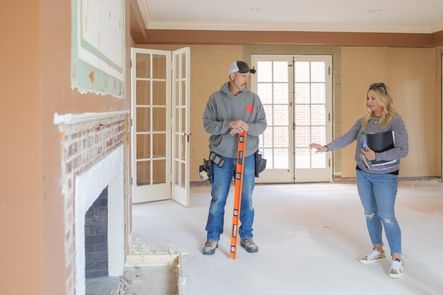
That simple suggestion revolutionized how I organized information, but more importantly, it taught me something crucial: your systems aren't just for you—they're for everyone involved in bringing your vision to life.
This insight completely changed my approach. Instead of creating systems that made sense to me, I started building them around the people who actually had to use them. The results were immediate and dramatic.
From Reactive Chaos to Proactive Control
The real transformation became clear when I compared my Monday mornings before and after implementing systems.
Before: I'd walk into the office to a flood of weekend emails and contractor calls. Every question felt urgent. I'd spend the entire day reactively putting out fires, and by afternoon, I'd accomplished nothing for the week ahead. Pure chaos.
After: Monday mornings became sacred. No client appointments, no site visits—just our team prep day. We start with a design meeting where everyone shares their week ahead, then individual status meetings where we tackle creative challenges and remove obstacles.

Makayla, Anna, and Keegan | Bodine White Learn More about Bodine White
This one change transformed everything.
When everyone else is scrambling on Monday morning, we're ahead of the game because we've already planned, communicated, and prepared.
But the real test of my new systems came during a project that could have cost my clients thousands of dollars.
When Documentation Became My Superpower
We had clearly specified where a tile transition should stop, but the installer decided he thought it would be best to extend it an additional six inches without asking anyone. When he called requesting 30 more square feet of expensive tile plus additional bullnose pieces, I knew exactly what had happened.
Because I had clear documentation showing our original specifications, I could confidently tell the builder: "My clients aren't paying for this. Your contractor chose to do something different than our instructions showed."
Without that documentation? It would have been my word against his, and my clients would have paid for his unauthorized decision.
This moment crystallized why systems matter: they're not about covering yourself—they're about protecting everyone involved and ensuring your vision gets executed correctly.
Breaking Through the "I Don't Have Time" Barrier
I know what you're thinking because I used to think it too: "This sounds great, but I don't have time to build systems." When I was charging $6,000 for entire house designs, I literally couldn't afford to hire help, let alone spend time on infrastructure.
But here's what I learned the hard way: you don't have time NOT to create systems.
I get it if the word "process" makes you want to run in the other direction—it used to have the same effect on me. The thought of documenting everything felt overwhelming and corporate, the opposite of why I got into design.
Here's what changed my perspective: you don't have to create these systems yourself. Sometimes the best approach is having someone else watch how you work and document it for you. Whether that's a team member, a virtual assistant, or a consultant, the key is getting your methods out of your head and into a format others can follow.
Just make sure you're delegating to the right person.
This work requires someone who's naturally detail-oriented and process-focused. Not everyone has the skill set to translate your creative workflow into systematic documentation. Look for people who thrive on organization and precision.

Jesse and Keegan | Bodine White Learn More about Bodine White
Even when it was just me, I started with simple changes: basic documentation that minimized mistakes, clear communication protocols, simple tracking systems for orders and timelines. Start with one small system, not an entire business overhaul. The goal isn't perfection—it's progress.
The ROI was immediate.
Every system I created bought back time and mental energy to focus on what I actually loved: designing.
The Delegation Challenge That's Always Evolving
As I grew and hired team members, I hit another wall. I was still needed in every aspect of every project, and honestly, delegation is something that continues to evolve as our business grows.
If you're a high performer who naturally goes above and beyond (sound familiar?), delegation doesn't happen overnight. It's a skill that develops in phases, and each phase brings its own challenges.
Start with the obvious wins.
Delegate the busy work that pulls you away from your zone of genius. The scheduling, the vendor follow-ups, the order tracking—anything that doesn't require your creative expertise or client relationship skills.
My nursing background helped me develop a training approach: Watch → Do Under Supervision → Demonstrate Mastery. This progressive responsibility model has been invaluable, and delegation truly is an ongoing evolution, not a destination.
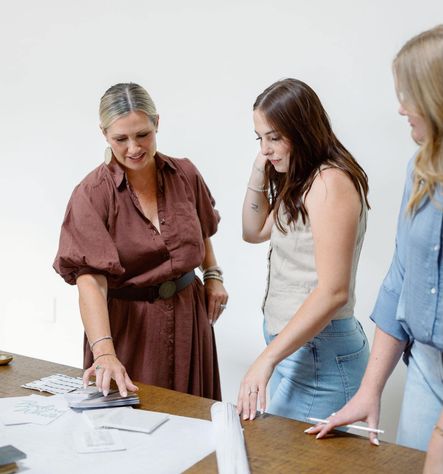
Jesse, Anna, and Makayla | Bodine White Learn More about Bodine White
Having core values that clearly represent your brand makes this process much easier. When your team understands what you stand for and how you operate, they can represent you authentically.
The real complexity comes when you start scaling a team and have team members engaging directly with clients. That's when delegation becomes less about task management and more about trust, communication, and brand representation. We'll dive deeper into those challenges in future posts.
What I've learned is that actively promoting my team's expertise - showing clients and contractors why they should be excited to work with these talented people - creates better outcomes for everyone.
The Creative Dividend You Don't Expect
Here's what surprised me most: strong systems actually enhanced my creativity rather than limiting it. When I'm not constantly worried about missed details or forgotten follow-ups, my brain has space for the creative work I love.
Even better, organized designers can charge premium rates because clients see the level of professionalism and follow-through. They don't just trust your design vision; they trust you to execute it flawlessly.
Your Starting Point
The beautiful truth about building systems is the compound effect. Each system you implement makes the next one easier. Your confidence grows. Your stress decreases. Your creativity flourishes.
If you could only implement one system this month, block off your Mondays. Use this time to prep for the week ahead instead of scrambling to catch up.
Building systems isn't about becoming corporate—it's about creating the infrastructure that lets your creativity flourish at scale. Start with one small change, stay consistent, and remember that every system you build is an investment in your future self.
What's one system you could implement this week that would immediately improve your workflow? I'd love to hear what's working for you and what challenges you're facing.
What's one systematic change you could make this week that would immediately create more space for creativity? I'd love to hear about your foundation-building journey in the comments below.
Next time, we'll explore how to discover and articulate your unique value proposition - because having great systems is only half the equation. The other half is making sure the right clients find you and understand why you're exactly what they need.
Comments
Comment or question? Leave it below.
The day I spent four hours tracking down a single light fixture while three clients were waiting for design decisions, I realized something had to change. You can create the most beautiful spaces in the world, but without systems that scale, you'll spend more time putting out fires than actually designing.
keep readingWhen a designer you admire chooses to include pieces from Scout & Nimble in their own home, it means the world. This month, we're thrilled to share a glimpse into Jennifer Hunter's beautifully curated Connecticut sanctuary—and the few special pieces she selected from our collection to make it her own.
keep readingThese three fall trends we’re really loving. What makes them special? They feel a bit off the beaten path, not yet adopted by the masses. They're subtle, which makes them fun to play with and gives them the longevity to create a truly collected space.
keep readingOver 10 years into my business, and here I am: faced with the same challenge that forced me to level up when I was starting out, except now the stakes feel impossibly higher.
keep readingTraditional style isn't going anywhere, but it certainly isn't staying the same. What once felt like your grandmother's formal living room has evolved into something far more nuanced, personal, and wonderfully livable.
keep readingThe day I spent four hours tracking down a single light fixture while three clients were waiting for design decisions, I realized something had to change. You can create the most beautiful spaces in the world, but without systems that scale, you'll spend more time putting out fires than actually designing.
keep readingWhen a designer you admire chooses to include pieces from Scout & Nimble in their own home, it means the world. This month, we're thrilled to share a glimpse into Jennifer Hunter's beautifully curated Connecticut sanctuary—and the few special pieces she selected from our collection to make it her own.
keep readingStay Inspired


